
DuoDiscus
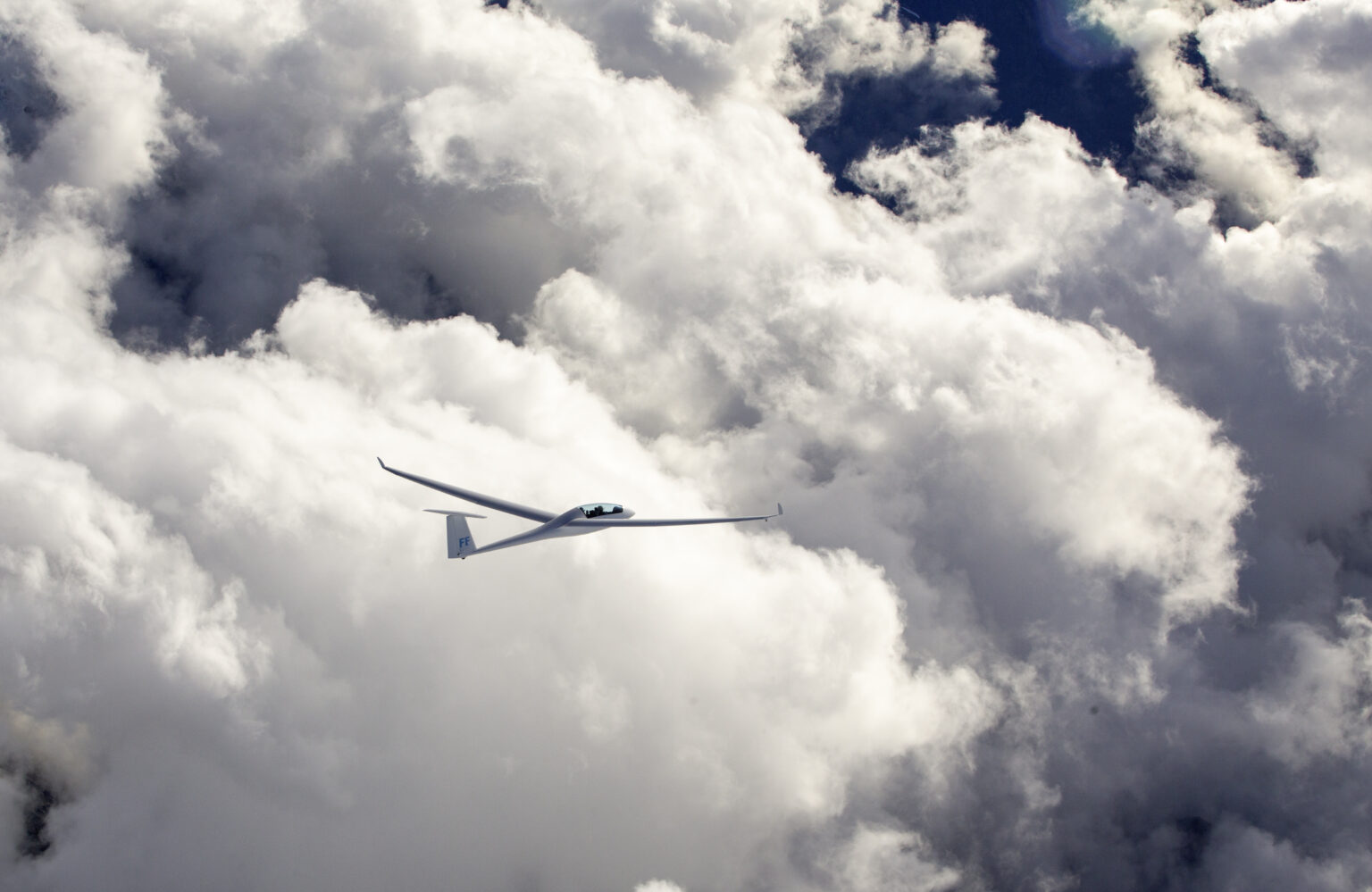
THE TWO-SEAT PERFORMANCE GLIDER
The DuoDiscus
Two seats. Twenty metres. A remarkable way to explore the Southern Alps.
High-performance two-seat soaring
Built for shared flying
Kahu Soaring operates a DuoDiscus X, “Dolores” (DD), and a DuoDiscus XL, “Felicia” (FF), for instruction, mountain soaring and longer flights from Omarama.
The tandem cockpit gives an instructor and pilot a clear view of the same flight, while the efficient 20-metre wing makes the aircraft a capable platform for learning, exploring and covering real distance in the Southern Alps.
The story behind the shape
A glider built for shared ambition
The DuoDiscus sits at the meeting point of high-performance design and the simple pleasure of flying with another person. Its story starts with a practical question: how do you make a two-seat glider that can teach, travel and still feel entirely at home in rising air?
Development
From Janus to DuoDiscus
Schempp-Hirth’s Janus made composite two-seat cross-country soaring practical and helped establish the FAI 20-metre Two-Seater class. The DuoDiscus followed as the clean, no-flap successor: a 20-metre sailplane intended to carry two pilots into serious distance flying while remaining useful for everyday training.
The designer
Klaus Holighaus
Schempp-Hirth credits Klaus Holighaus as the DuoDiscus designer. He joined the company as a design engineer in 1965, and his work shaped a generation of composite sailplanes. The design language is clear: efficient structure, thoughtful aerodynamics and handling that leaves an instructor room to teach while still rewarding an experienced pilot.
The company
Schempp-Hirth
The company began as Sportflugzeugbau Martin Schempp in Göppingen on 4 January 1935. Wolf Hirth became a 50% partner in 1938, giving the company the Schempp-Hirth name. Today Ralf and Tilo Holighaus jointly manage the business, continuing a family-led line of German sailplane design and production.
The XL refinement: The later DuoDiscus XL keeps the same core idea and improves the human details: a cockpit 10 cm longer, a better rear-seat view, a tilt-up front panel and mechanically coupled airbrakes and trailing-edge flaps for steeper, slower approaches.
Story references: Schempp-Hirth company history, Klaus Holighaus design archive, and the DuoDiscus XL technical page.
At a glance
Three-view profile
A clean reference drawing of the aircraft’s top, side and front profiles. It is a visual guide rather than a maintenance drawing.

Schematic prepared for Kahu Soaring. Reference data: Schempp-Hirth DuoDiscus XL technical data and the New Zealand CAA type acceptance report.
Published reference data
Specifications
| Aircraft | Schempp-Hirth DuoDiscus X / XL |
|---|---|
| Seats | Two, tandem |
| Wingspan | 20.00 m |
| Wing area | 16.40 m² |
| Fuselage length | 8.73 m (published XL figure) |
| Max. all-up mass | 750 kg (published XL figure) |
| Max. permitted speed | 262 km/h (published XL figure) |
| Best glide | Approximately 45:1, depending on variant and loading |
| Construction | Composite CFRP/GFRP airframe with retractable main wheel and Schempp-Hirth airbrakes |
Ready to fly together?
Meet the DuoDiscus at Omarama
Ask about a first flight, a mountain-soaring course or a longer flight in Kahu’s two-seat fleet.
Ask about DuoDiscus flying